Do you have a passion for education but a deep interest in psychology? School psychology combines both education and psychology to foster and support a positive learning environment for students across educational settings. And now more than ever, school and educational institutions are seeking well-rounded school psychologists to help students’ mental, social, emotional and behavioral needs.
There is currently a high demand for school psychologists due to staffing shortages across the country. The National Association of School Psychologists recommends one school psychologist for every 500 students. On top of that, educational settings are seeing a rise in mental health needs among students and there are not enough school psychologists available, especially in rural areas.
It’s important for school psychologists to receive proper education and training to address the workforce shortage and identify challenges students and institutions may face. Furthermore, understanding the requirements needed to become a school psychologist can also help you decide if this is the career for you.
What is School Psychology?
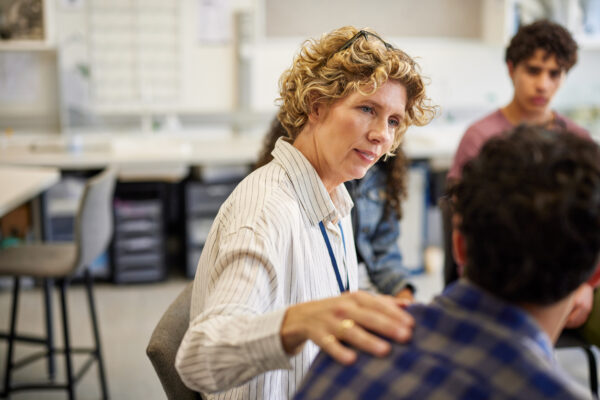
School psychology is a field that combines psychology and education to help students succeed academically, socially, emotionally and behaviorally. School psychologists typically work with students, families, teachers and school administrators to identify challenges that may be affecting a student’s learning or well-being and determine what kinds of support could help.
It’s important to note that school counseling often provides broader academic and social guidance to students, while school psychology is more focused on psychological assessment, intervention, consultation and data-based decision-making.
What Does a School Psychologist Do?
So, what does a school psychologist do? A school psychologist’s work may involve assessing students, developing interventions, consulting with educators, supporting families and contributing to schoolwide programs. Their responsibilities can vary from day to day depending on the needs of their students and school community, but several common tasks for a school psychologist include:
- Offer personalized mental and behavioral health support to struggling students
- Conduct student assessments to evaluate a student’s academic, cognitive, behavioral and social needs
- Develop academic and behavioral interventions by collaborating with teachers and families to improve student outcomes
- Support special education services by evaluating and determining if students meet the requirements for special education and help review Individualized Education Programs (IEP)
- Foster positive school environments by helping design initiatives relating to bullying prevention, social-emotional learning and school safety
Some professionals may serve one school, while others work across multiple campuses within a district. Others may work in colleges, community-based organizations or private practices. The work environment can influence a school psychologist’s responsibilities. Someone working directly within a school may spend more time conducting assessments and consulting with teachers, while a professional working at the district level may have greater involvement in program development or policy.
According to the U.S. Bureau of Labor Statistics, school psychologists earn on average $91,990, or $44.22 per hour, while the median annual wage is $84,940. Earnings can vary based on experience, location and work setting, with the top 10% of school psychologists earning $131,470 or more annually.
How Do You Become a School Psychologist?
Requirements for becoming a school psychologist can differ by state and position, but generally require education beyond a bachelor’s degree.
The first step to becoming a school psychologist is earning a bachelor’s degree in psychology or a related field. A bachelor’s degree is important because it provides the academic foundation needed to pursue the graduate-level education required to become a school psychologist. Students can use their undergraduate studies to build knowledge in areas such as psychology, human development, learning, research, and behavior so they can further their education in psychology.
Abilene Christian University (ACU) offers a fully online B.S. in psychology degree where students can explore topics such as cognition and learning, developmental and social psychology, counseling, psychological research and abnormal psychology while developing skills in communication, observation and analysis. The program’s flexible curriculum can prepare graduates for opportunities across fields such as human services, business, research and community organizations, while also providing a foundation for graduate study in psychology, counseling or social work.
After receiving a bachelor’s degree, school psychologists earn a specialist-level graduate degree in school psychology, while others pursue a doctoral degree. Graduate programs in school psychology may cover subjects such as:
- Human development
- Learning and cognition
- Psychological assessment
- Behavioral interventions
- Counseling
- Research methods
- Special education
- Ethics and professional practice
Programs may also include supervised field experiences, practicums and internships that allow students to apply what they have learned in educational settings.
After completing the required education and supervised experience, aspiring school psychologists typically need to meet their state’s credentialing or licensure requirements. Because these requirements vary, prospective school psychologists should research the specific standards in the state where they plan to work.
ACU offers experienced educators and school-based professionals a pathway to meet Texas licensure requirements with a designed retraining model program and specialized coursework. The Certificate for Advanced Graduate Studies in School Psychology is an online graduate certificate program that equips students with practical knowledge and skills through coursework and residency to ensure they’re able to receive licensure and practice professionally.
What Skills Does a School Psychologist Need?
Because school psychologists work with students, families and professionals from a variety of backgrounds, the career requires a combination of technical knowledge and interpersonal abilities.
Communication is particularly important. School psychologists must often explain complex assessment results or psychological concepts in ways that students, parents and educators can understand.
Other valuable skills may include:
- Critical thinking and problem-solving
- Active listening
- Collaboration and teamwork
- Data analysis
- Observation
- Organization and time management
- Empathy and patience
- Cultural awareness and responsiveness
- Decision-making
School psychologists also need to manage multiple responsibilities while maintaining careful records and adhering to ethical and professional standards.
Pursue an Education in School Psychology at ACU
Understanding what a school psychologist does is an important starting point if you’re considering a career in the field. From conducting assessments and developing interventions to collaborating with families and supporting student mental health, school psychologists can serve many important functions within educational communities.
Preparing for this career begins with building a strong foundation in psychology, human development and related subjects. Your undergraduate education can help you develop foundational knowledge and skills while preparing you to pursue the graduate-level training typically required for school psychology.
Abilene Christian University (ACU) offers flexible online undergraduate programs designed to help you pursue your goals while balancing life’s other commitments. You’ll be able to expand your skills as an educator or school professional to uplift students struggling to thrive academically, behaviorally, socially and emotionally. To learn more about the Advanced Graduate Studies in School Psychology certificate and how it can help you start a career in school psychology, visit our website.
Common FAQs about School Psychology
What’s the Difference Between a School Psychologist and a School Counselor?
School psychologists and school counselors both support students, but their training and responsibilities are typically different.
School counselors often focus on students’ academic planning, social-emotional development and college or career preparation. Depending on the grade level, they may help students select courses, explore careers, prepare for college or work through personal challenges.
School psychologists generally receive more specialized training in psychological assessment, learning and behavior. They may spend more time evaluating students, developing interventions, consulting with educators and participating in special education processes.
There can be overlap between the professions, and both may collaborate as part of a broader student support team.
Is School Psychology a Good Career?
Whether school psychology is a good career depends largely on your interests, strengths and professional goals. The field may appeal to people who enjoy working with children and adolescents but also want to use psychology, research and data to address educational challenges. It can also be a good fit for professionals who enjoy collaboration because school psychologists frequently work as part of multidisciplinary teams.
The profession can involve complex cases and challenging situations, so patience, adaptability and strong interpersonal skills are valuable. At the same time, school psychologists may have opportunities to make meaningful contributions to students’ educational experiences and long-term development.