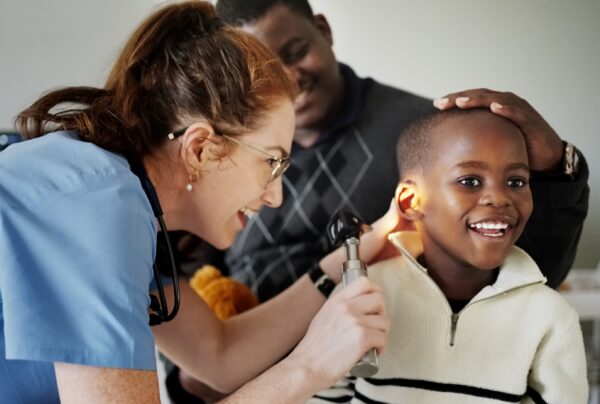
Hearing affects how we communicate, build relationships and experience the world around us. Yet, hearing loss is becoming increasingly common, with the Hearing Loss Association of America reporting that nearly 50 million adults have some degree of hearing loss.
As more individuals navigate hearing and auditory conditions, audiologists play an important role in providing specialized care for hearing and communication disorders. From diagnosing hearing and balance disorders to developing treatment plans and promoting hearing health, these professionals help patients improve their communication skills and day-to-day lives.
What is an Audiologist?
An audiologist is a healthcare professional who specializes in evaluating, diagnosing and managing hearing and balance disorders in children and adults. Using specialized testing and technology, audiology can assess how well someone hears, identify the type and severity of hearing loss, and develop an effective treatment plan.
Audiologists can also work in various settings such as:
- Schools, colleges and universities
- Residential care facilities
- Rehabilitation centers
- Hospitals and clinics
- Private practices
According to the Bureau of Labor Statistics, an audiologist’s average annual salary is $95,780. The profession is also projected to grow by 11 percent by 2035, with about 600 new job openings each year.
What Does an Audiologist Do?
Diagnose Disorders
One of an audiologist’s primary responsibilities is diagnosing a patient’s hearing, auditory or balance disorder. Audiologists use specific, targeted assessments to determine how well a patient can hear different sounds, frequencies and speech. They may also perform hearing tests and examine the ear to better understand how each part of the auditory system is functioning for a patient.
After the evaluation is complete, audiologists will discuss the findings with the patient or their family. Depending on the diagnosis, they will develop a treatment plan, recommend hearing technology or refer a patient to another healthcare professional for additional diagnosis or treatment.
Common disorders audiologists test for are:
- Hearing loss
- Ear infections
- Balance and Vestibular disorders
- Tinnitus
- Auditory Processing Disorder (APD)
Fit Hearing Devices
For individuals experiencing hearing loss, technology can play an important role in improving communication and quality of life. Audiologists help patients decide if hearing aids or other assistive hearing devices are appropriate for their needs. Rather than taking a one-size-fits-all approach, they consider key factors such as, the type of hearing loss, communication needs, the patient’s lifestyle and personal preferences.
From there, an audiologist can select, fit and program hearing aids to ensure that the devices properly address a patient’s hearing needs. They may also work with cochlear implants, assistive listening systems and other hearing devices based on their practice setting and area of expertise. After the device has been fitted, an audiologist will test its overall performance and teach the patient how to use and care for the device correctly.
Provide Treatment
Beyond fitting hearing devices and diagnosing patients, an audiologist will also develop individualized strategies to help patients manage their conditions and improve their ability to communicate. Treatments vary based on the patient’s diagnosis, age, goals and personal needs.
For someone with hearing loss, treatment may include auditory rehabilitation to help the patient adjust to hearing changes and use hearing technology. Audiologists may also teach communication strategies that help patients better understand conversation in challenging environments.
Some audiologists also evaluate and treat certain balance and vestibular disorders, often working alongside physicians and other healthcare professionals. Throughout treatment, audiologists monitor progress and adjust recommendations as needed.
Prevent and Educate
Audiologists also help prevent hearing problems in adults and children, protecting hearing before permanent damage occurs. Repeated exposure to loud sounds can contribute to hearing loss, making prevention and early intervention important to auditory healthcare.
An audiologist will educate others on the risk of hearing loss and make recommendations and strategies to reduce harmful noise exposure. This may include guidance on safe listening practices when using headphones, appropriate hearing protection at concerts or recreational events and protection for people who regularly work in noisy environments.
Regular hearing evaluations are another way audiologists help prevent early hearing loss. Detecting a potential problem early can help patients reduce contributing factors and adopt better habits, such as listening to music more responsibly, to protect their hearing.
How Do You Become an Audiologist?
The first step to becoming an audiologist is earning a bachelor’s degree in communication sciences and disorders or a related field such as speech-language pathology or biology. Completing an undergraduate program will allow you to take any prerequisite courses and build the foundational knowledge needed to pursue graduate study.
Abilene Christian University (ACU) offers several online pathways for students interested in communication sciences and disorders. The online Bachelor of Science in Communication Sciences and Disorders is a pre-professional program that explores speech, language and hearing development while building foundational knowledge needed for graduate-level study in audiology, speech-language pathology and related fields.
For students who already have a bachelor’s degree in another field, ACU’s online Speech-Language Pathology (SLP) Certificate allows them to complete the prerequisite courses needed to enroll in a graduate SLP program, while the Speech-Language Pathology Assistant (SLPA) Certificate equips students with knowledge and skills to support SLPs and families with treatments and more as an SLPA.
After completing an undergraduate degree, the pathway to becoming a practicing audiologist generally includes:
- Earn a doctoral degree in audiology. Complete a Doctor of Audiology (Au.D.) that combines advanced coursework with supervised clinical experiences and an externship.
- Pass the Praxis Examination in Audiology. Students often complete the Praxis exam during the final year of their doctoral program to demonstrate their knowledge and preparation for professional practice.
- Obtain state licensure. Requirements vary by state. In Texas, applicants must meet the state’s education and examination requirements, including passing the Praxis Examination in Audiology and the Texas Jurisprudence Examination, before applying for licensure.
- Maintain your license. Texas audiologists must renew their licenses every two years and complete 20 hours of continuing education during each renewal period.
Texas applicants must also submit the required licensure application and fee, provide official doctoral transcripts and satisfy applicable fingerprinting and background check requirements. Once these requirements are completed, graduates can begin practicing as licensed audiologists and helping patients improve their hearing, communication and daily lives.
Students called to become speech-language pathologists can continue their education through ACU’s Master of Science in Speech-Language Pathology, with options to study in Abilene, Dallas or online. Through advanced coursework and hands-on clinical experiences, students develop the knowledge and practical skills to assess and treat communication, cognitive and swallowing disorders across diverse populations. The program prepares graduates to meet academic and clinical requirements for professional certification through the American Speech-Language-Hearing Association (ASHA) and pursue state licensure.
Take the First Step Towards Becoming an Audiologist at ACU
Audiologists play an essential role in helping people hear, communicate and engage more fully in their everyday lives. From diagnosing hearing and balance disorders to providing treatment, fitting hearing devices and educating patients, the profession brings together science, technology and compassionate care. While becoming an audiologist requires advanced education and clinical training, your journey can begin by developing a strong foundation in communication sciences and disorders.
At ACU, you can explore that foundation through flexible academic pathways designed to prepare you for what comes next. Whether you begin with ACU’s online B.S. in Communication Sciences and Disorders, pursue an SLP or SLPA certificate or continue into the Master of Science in Speech-Language Pathology offered in Abilene, Dallas and online, you can build the knowledge and skills to pursue your calling in communication sciences. For more information about ACU’s online programs and how they can help you achieve your audiology goals, visit our website.