 For almost two decades, Dr. Kelly Matlock has dedicated her life to caring for others. As a physician and anesthesiologist in rural Texas, she has spent her career helping patients through some of life’s most critical moments. Yet after years of practicing medicine, she began asking a different kind of question. What happens after the procedure is over?
Dr. Matlock had long recognized that patients are more than someone you treat, but have lives, battles, needs and more. Physical symptoms often tell only part of the story, and she wanted to better understand how life’s experiences, relationships and emotional well-being influence overall health. That desire to care for the whole person ultimately led her to Abilene Christian University’s (ACU) online Master of Marriage and Family Therapy.
The Connection Between Mental and Physical Health
Dr. Matlock’s educational journey has always centered around healthcare. After earning her undergraduate degree at Angelo State University, she attended Texas A&M for medical school before completing her residency, where she met her husband, Brent Homan. After her residency, she practiced near Fort Hood, Texas, before returning to her hometown, Mineral Wells, Texas, where she became the director of anesthesiology and continues to serve patients today.
Although medicine remained her calling, Dr. Matlock realized there was another aspect of patient care she wanted to explore. “I’ve always known that people are not just the diagnosis before you,” she shared. Rather than viewing mental and physical healthcare as separate disciplines, Dr. Matlock saw an opportunity to bridge the gap between the two.
Finding the Language for Life’s Experiences
The online Master of Marriage and Family Therapy program gave Dr. Matlock something she didn’t expect: language for experiences she had personally lived through. “I’ve been able to put a language to the content I’m learning and have been able to explain it to others,” she said.
Several concepts resonated deeply with both her personal and professional life, particularly the concept of ambiguous loss, which describes situations where loss exists without clear closure. The term immediately brought to mind her husband’s line-of-duty injury. Although he survived, life changed dramatically.
“He was there, but different from the man I married,” she reflected. “That concept helped me personally understand life as a journey.”
Another area of study that left a lasting impression focused on systemic trauma among healthcare professionals. Reading about the emotional burdens carried by physicians, nurses and emergency responders felt remarkably familiar after years spent working in hospitals.
“It felt like I was reading something so close to me,” she said.
The coursework reinforced what she had witnessed throughout her career: healthcare professionals often experience repeated exposure to trauma while receiving little support for their own mental well-being. It also strengthened her desire to help those who spend their lives caring for others.
An Online Program Built for Working Professionals
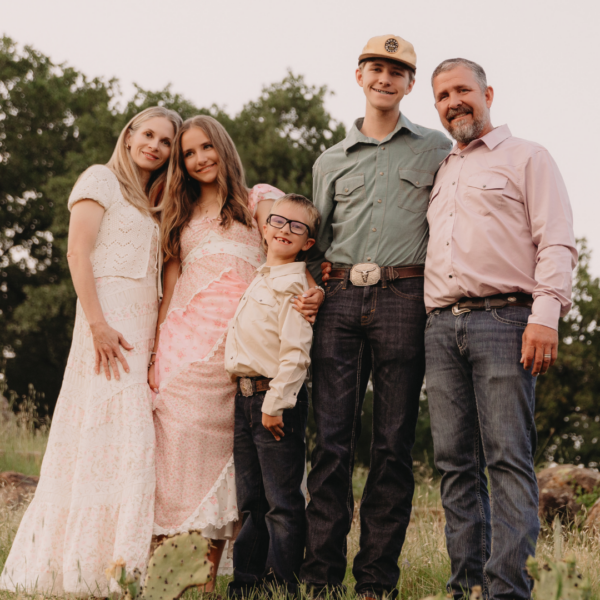 Balancing graduate school with a demanding medical career and family life required flexibility. Working 40 to 50 hours each week while raising three children left little room for a traditional classroom schedule. ACU’s asynchronous online format allowed Dr. Matlock to complete coursework around her professional responsibilities without sacrificing academic quality.
“It wouldn’t have been possible for me to work and do graduate school if I had classes to attend every day,” she explained. “Being able to do it on my own time is amazing.”
Like many online students, the first week felt overwhelming. “I took off work my first week because I thought I needed to figure everything out,” she recalled.
Her student advisor patiently walked her through Canvas and answered her questions, giving her the confidence to navigate the program successfully. That experience also reminded her of her husband’s own educational journey. Following his injury, he returned to school, an intimidating step that ultimately rebuilt his confidence. Semester after semester, he earned Dean’s List recognition and discovered he was capable of succeeding academically despite the uncertainty he once felt.
For Dr. Matlock, ACU’s support demonstrated that higher education remains accessible even during life’s most demanding seasons. She also found encouragement through the relationships she built with classmates and appreciated a program structure that allowed her to stay ahead in her coursework.
“ACU has made this possible for us,” she said. “It makes it possible for working adults to do it.”
Looking Toward the Future
Although Dr. Matlock has no plans to leave anesthesiology, she envisions a future where both of her passions work together. She hopes to eventually adjust her schedule to practice both medicine and therapy, with a particular interest in trauma-informed care that integrates therapeutic approaches with medical treatment. She is especially interested in supporting fellow physicians, a group she believes is often reluctant to seek mental health care despite experiencing significant workplace stress and trauma.
She also hopes to help healthcare professionals strengthen their relationships with spouses, families and the people who matter most. “Relationships are the most important things,” she said. “It’s not the money or the house. It’s the family I have and making sure they know that I love them.”
Never Stop Growing
Returning to graduate school has reinforced something Dr. Matlock now shares with others, including her own children: life rarely follows a straight path. As her son prepares for college, she reminds him that it’s okay not to have all the answers.
“You don’t have to know exactly what you’re going to do,” she said.
Reflecting on her own journey, she recognizes that every season of learning has shaped the next. Rather than replacing her career in medicine, studying marriage and family therapy has given her a deeper appreciation for it by helping her better understand the people behind every diagnosis. “The more I go to school and learn,” she said, “the more I come to appreciate my career.”
Her story serves as a reminder that education is not simply about changing professions. Sometimes, it expands the way we serve others. Through ACU’s online Master of Marriage and Family Therapy program, Dr. Kelly Matlock is continuing to grow as a physician, a lifelong learner and a compassionate leader committed to caring for the whole person’s mind, body and spirit.
If you’re interested in pursuing a career in therapy or looking to earn your degree online, visit our website for more information.