Learn More
Doctor of Philosophy in Nuclear Science and Engineering
Complete this short form to learn more about our Doctor of Philosophy in Nuclear Science and Engineering. ACU’s Graduate Admissions will reach out shortly to discuss your interests and answer your questions.
Program Structure
What To Expect
These are the important details you will need to keep in mind as you prepare your application and degree plan.
Required Hours
Credit Hours: 30 credit hours beyond a completed master’s degree, 60 total graduate credit hours for students entering directly after a bachelor’s degree.
Department
Application Deadlines
Priority Deadline: November 1
Regular Deadline: February 1
Or until the program has reached capacity.
Frequently Asked Questions
Why Earn a Ph.D. in Nuclear Science and Engineering at ACU?
- Conduct original research in reactor physics, advanced reactor design, nuclear safety and systems innovation.
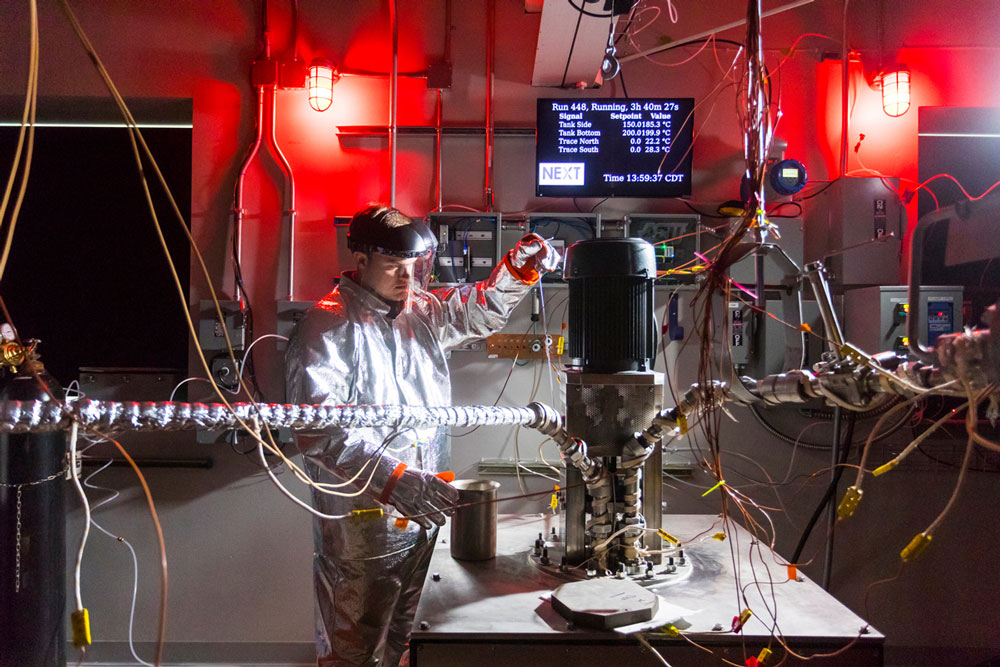
- Gain hands-on research opportunities through ACU’s molten salt research reactor program (housed in the NEXT Lab).
- Work alongside experienced faculty on experimental, computational and theoretical research.
- Build expertise in reactor theory, thermal hydraulics, radiation transport, computational modeling and nuclear materials.
- Customize your research with interdisciplinary coursework in engineering, physics, chemistry, mathematics and computer science.
- Develop leadership, technical communication and professional presentation skills through seminars and faculty mentorship.
- Learn in a Christ-centered environment that emphasizes integrity, service and ethical leadership.
Careers
Graduates are prepared for careers including:
- Nuclear engineer
- Reactor physicist
- Advanced reactor design engineer
- Nuclear safety analyst
- Nuclear licensing engineer
- Computational modeling specialist
- National laboratory researcher
- University faculty
- Fuel cycle analyst
- Molten salt reactor researcher
- Space nuclear systems engineer
Applicants should:
- Complete an online application.
- Pay the $50 application fee.
- Hold a bachelor’s or master’s degree in engineering, physics, chemistry or a closely related STEM discipline from an accredited institution.
- Have a minimum undergraduate GPA of 3.0.
- Demonstrate preparation in calculus, differential equations, physics and chemistry. Additional engineering coursework may be required depending on academic background.
- Submit a statement of purpose describing research interests and career goals.
- Provide two letters of recommendation.
At this time, the Nuclear Science and Engineering graduate programs at Abilene Christian University are not approved for F-1 sponsorship, and we are unable to issue an I-20 for these programs.
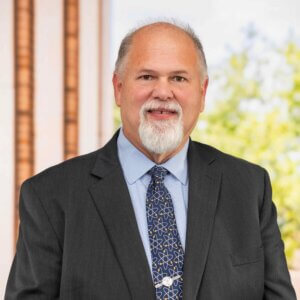
Mark DeHart, PhD
Program Director
Mark.DeHart@acu.edu
Dr. Mark D. DeHart is an associate professor in the Onstead College of Science and Engineering at Abilene Christian University. With over 36 years of experience in nuclear engineering prior to joining ACU in 2025, he has been instrumental in developing ACU’s first Ph.D. program. Previously, Dr. DeHart held senior roles at Idaho National Laboratory and Oak Ridge National Laboratory, advancing reactor physics and criticality safety. A Fellow of the American Nuclear Society, he has led international collaborations and directed multi-physics efforts for various advanced reactor designs. Dr. DeHart holds B.S., M.S. and Ph.D. degrees from Texas A&M University and is dedicated to preparing the next generation of nuclear science leaders through a curriculum that integrates cutting-edge technologies and hands-on research.

Students may pursue research in areas such as:
- Advanced reactor design
- Reactor physics
- Molten salt reactor technology
- Nuclear materials
- Radiation transport and shielding
- Computational modeling
- Nuclear data and uncertainty analysis
- Nuclear security and nonproliferation
- Reactor licensing and regulatory science
- Thermal hydraulics
- Radiation detection and measurement

Jim Drachenberg, PhD
Graduate Program Coordinator
jld00a@acu.edu
Dr. Jim Drachenberg is a professor in the Physics Department. He holds a Bachelor of Science from ACU and a PhD from Texas A&M University. With 22 years of experience in nuclear physics research at Brookhaven National Laboratory, Dr. Drachenberg was the deputy spokesman for the STAR Collaboration for three years and co-convener of the STAR Spin Physics Working Group. He has also served as a Research Physicist at NEXT Lab for the last 2.5 years. A co-principal investigator on several federal grants in nuclear science and engineering, Dr. Drachenberg has mentored one postdoctoral associate and over 50 undergraduate students in their research efforts, fostering the next generation of physicists.
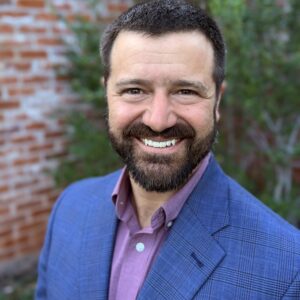
Dr. Trey Holik
Dr. Trey Holik is an associate professor in the Department of Nuclear Science and Engineering within the Onstead College of Science and Engineering. He holds bachelor’s degrees in physics and mathematics from Angelo State University and M.S. and Ph.D. degrees from Texas A&M University. Dr. Holik was a professor of physics at Angelo State for 13 years, during which he also held a three-year dual appointment as a Toohig Fellow in accelerator science at Fermilab. Most recently, he served as chair of the Physics and Geosciences Department at Angelo State University and as faculty senate president. In addition to his leadership experience, Dr. Holik has mentored over 30 students and received the TTU Chancellor’s Council Distinguished Research Award.

Dr. Emmanuel Mate-Kole
Dr. Emmanuel Matey Mate-Kole is an assistant professor of nuclear science and engineering in the Onstead College of Science and Engineering at Abilene Christian University. He currently serves on the Council on Ionizing Radiation Measurements and Standards (CIRMS) Executive Committee as co-chair of the Radiation Protection and Homeland Security Subcommittee, where he contributes to matters related to radiation protection and standards. He is also a program area committee member of the National Council on Radiation Protection and Measurement (NCRP), contributing to radiation education, risk communication and outreach. Dr. Mate-Kole has delivered several technical presentations nationally and internationally and has authored and co-authored a number of scientific publications as well as serving as a peer reviewer for reputable scientific journals. Dr. Mate-Kole has received multiple prestigious awards recognizing his academic excellence, scientific contributions and professional dedication to the field of nuclear science and engineering. Beyond his research and professional activities, he is committed to mentorship and has guided undergraduate and graduate students, as well as professionals and individuals, in their research, professional and personal endeavors. Dr. Mate-Kole holds a Ph.D. in nuclear and radiological engineering from the Georgia Institute of Technology, a master’s degree in nuclear engineering with a major in nuclear reactor physics and engineering from the Université Paris-Saclay (France), and a B.S. in physics from the Kwame Nkrumah University of Science and Technology (Ghana).