
Learn More
Nuclear Science and Engineering (M.S./M.Eng.)
Complete this short form to learn more about our master’s programs in Nuclear Science and Engineering. ACU’s Graduate Admissions will reach out shortly to discuss your interests and answer your questions.
Program Structure
What To Expect
These are the important details you will need to keep in mind as you prepare your application and degree plan.
Required Hours
Program Length: Approximately 18 months
Credit Hours: 30
2026/2027 Tuition/Credit Hour: $1,593
Example Coursework
Introduction to Nuclear Engineering
Nuclear Reactor Theory
Reactor Thermal Hydraulics
Reactor Design
Department
Application Deadlines
Priority Application Deadline (Fall): March 15
Standard Application Deadline (Fall): July 15
Frequently Asked Questions
Choose Your Path: M.S. vs. M.Eng.
While both degrees build a comprehensive foundational knowledge in nuclear physics, reactor theory, radiation interactions, and design, they are tailored to different career and professional development goals.
Master of Science (M.S.) in Nuclear Science and Engineering
The M.S. degree is a research-intensive program ideal for students passionate about theoretical depth, advanced scientific inquiry and contributing to the body of knowledge in nuclear science. Students undertake independent, faculty-supervised research that culminates in a substantial master’s thesis that makes significant intellectual contributions to the field. This immersive research experience fosters skills in critical thinking, experimental design, data analysis and scholarly communication. This program is ideal for students aspiring to doctoral studies, careers in academic research, or specialized industry R&D roles.
- 21 core credit hours of robust theoretical foundation (including a minimum of 6 hours for the research project)
- 9 elective hours for specialization in individual interests
- Research project, culminating in a master’s thesis that significantly contributes to the field. Potential thesis topics include reactor physics, advanced materials, radiation transport, and nuclear instrumentation.
Master of Engineering (M.Eng.) in Nuclear Science and Engineering
The M.Eng. degree is a practice-oriented, coursework-centered program designed for aspiring engineers who seek to directly apply nuclear science principles to real-world challenges. The emphasis is on applied design, systems integration, operational readiness and practical solutions for immediate industry impact. Instead of a thesis, the program culminates in a capstone project focused on hands-on problem-solving, project management, regulatory compliance. and prototyping. This program is ideal for professionals seeking to enter or advance rapidly into leadership roles within industry, utilities, regulatory bodies and engineering firms in the nuclear sector.
- 18 core credit hours in nuclear engineering fundamentals (including a minimum of 3 hours for the capstone project)
- 12 elective hours tailored toward professional goals such as reactor operations, licensing, or systems integration
- Capstone project, often carried out with industry collaboration or mentorship. Examples of capstone projects include advanced reactor design optimization, safety analysis for next-generation systems or innovative nuclear instrumentation development. The project culminates in a comprehensive written report and presentation.
The core coursework for both master’s degrees provides a direct and robust foundation for students interested in pursuing the forthcoming Ph.D. program (anticipated launch 2027), offering a smooth transition for those seeking the highest level of academic achievement and research expertise.
- Complete an online application;
- Pay the $50 application fee;
- A bachelor’s degree in physics, chemistry, engineering, or a closely related technical discipline from an accredited institution;
- A minimum undergraduate GPA of 3.0 on a 4.0 scale is required, along with completion of foundational coursework in mathematics, physics, and chemistry;
- Two letters of recommendation (academic or professional);
- A written statement of purpose (600-800 words) describing your qualifications and academic background, your previous research experience (i.e. projects, internships, relevant work), your motivation and passion in pursuing a graduate degree in nuclear science and engineering, and your professional goals and vision for contributing to the field;
- An interview
At this time, the Nuclear Science and Engineering graduate programs at Abilene Christian University are not approved for F-1 sponsorship, and we are unable to issue an I-20 for these programs.
 Mark DeHart, PhD
Program Director
Dr. Mark D. DeHart is an associate professor in the Onstead College of Science and Engineering at Abilene Christian University. With over 36 years of experience in nuclear engineering prior to joining ACU in 2025, he has been instrumental in developing ACU’s first Ph.D. program. Previously, Dr. DeHart held senior roles at Idaho National Laboratory and Oak Ridge National Laboratory, advancing reactor physics and criticality safety. A Fellow of the American Nuclear Society, he has led international collaborations and directed multi-physics efforts for various advanced reactor designs. Dr. DeHart holds B.S., M.S., and Ph.D. degrees from Texas A&M University and is dedicated to preparing the next generation of nuclear science leaders through a curriculum that integrates cutting-edge technologies and hands-on research.

Jim Drachenberg, PhD
Graduate Program Coordinator
Dr. Jim Drachenberg is a professor in the Physics Department at Abilene Christian University. He holds a Bachelor of Science from ACU and a PhD from Texas A&M University. With 22 years of experience in nuclear physics research at Brookhaven National Laboratory, Dr. Drachenberg was the deputy spokesman for the STAR Collaboration for three years and co-convener of the STAR Spin Physics Working Group. He has also served as a Research Physicist at NEXT Lab for the last 2.5 years. A co-principal investigator on several federal grants in nuclear science and engineering, Dr. Drachenberg has mentored one postdoctoral associate and over 50 undergraduate students in their research efforts, fostering the next generation of physicists.
The global demand for skilled professionals in nuclear science and engineering is experiencing unprecedented growth, driven by technological advancements in clean energy, medical isotopes, and national security. The U.S. nuclear power market is projected for significant growth, with high demand for specialized engineers. Graduates will be prepared for a diverse range of high-paying roles across various sectors, including:
- Nuclear engineer
- Reactor physicist
- Nuclear safety analyst
- Nuclear licensing engineer
- Fuel cycle analyst
- Computational modeling specialist
- Advanced reactor design engineer
- Roles in health physics and environmental monitoring
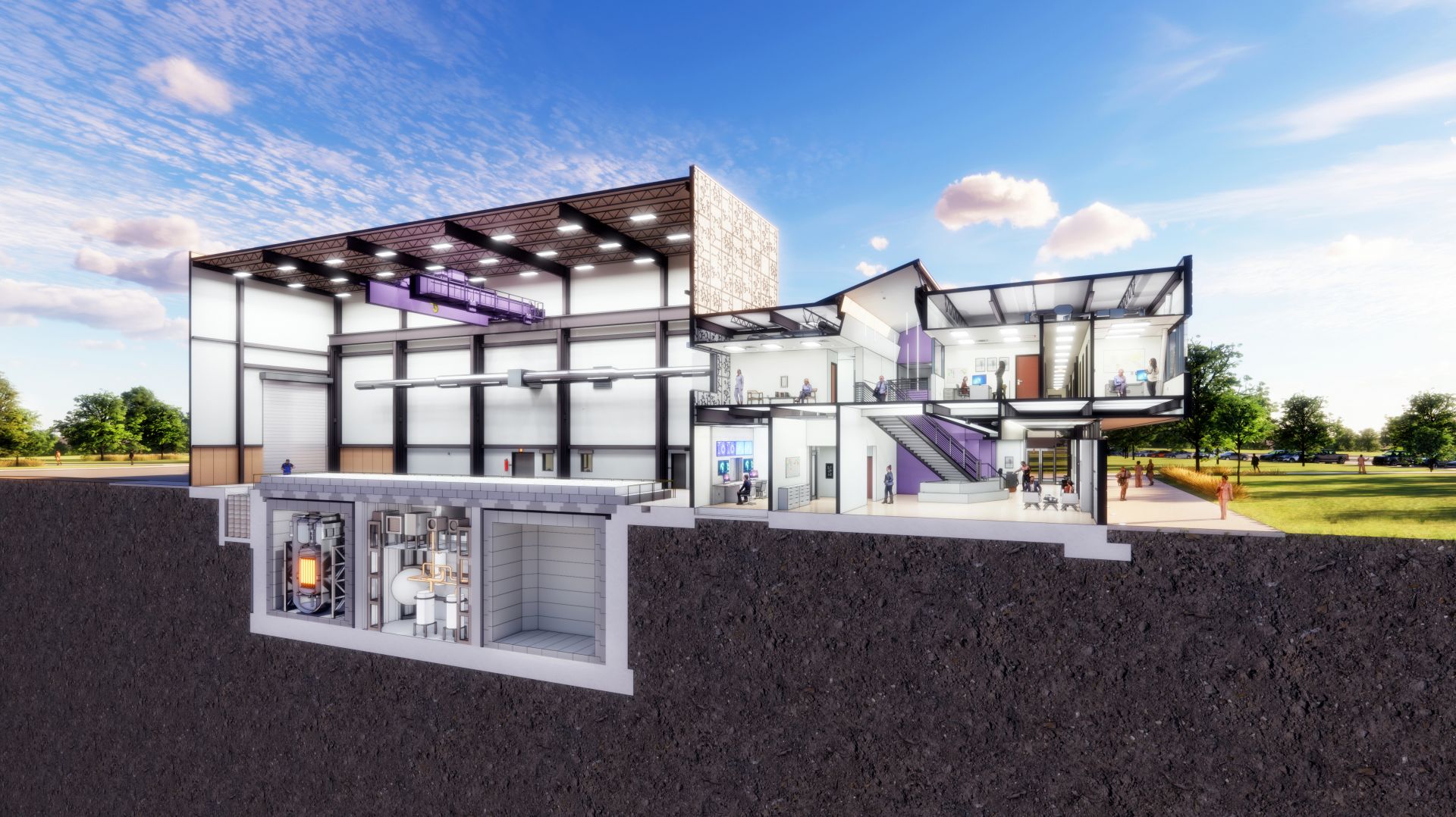
Both master’s programs leverage ACU’s unique molten salt research reactor (MSRR) and NEXT Lab facilities. This provides unparalleled, direct hands-on experience with advanced reactor systems, radiation detection and measurement, and experimental campaigns, preparing graduates for real-world scenarios.
Students will learn from knowledgeable instructors bringing diverse experience from national laboratories, leading industries, and academia. These faculty offer invaluable mentorship and real-world insights.
A Nuclear Program Fellowship is a competitive funding award that provides financial support, research opportunities and professional development for students pursuing advanced study in nuclear science and engineering. Fellowships often include tuition assistance, stipends and hands-on experience with industry partners or university research initiatives.
SMART | Opens: August 1 | Deadline: December 5
Livermore Lab Foundation | Deadline: January 9
DOE NNSA Stewardship Science Graduate Fellowship | Deadline: January 13
Graduate Fellowships for STEM Diversity | Deadline: January 15
DOE CSGF – Science and Engineering Track | Deadline: January 15
Mickey Leland Energy Fellowship Program | Deadline: January 20
Rickover Fellowship Program in Nuclear Engineering | Deadline: January 31
DOE NNSA Laboratory Residency Graduate Fellowship | Deadline: March 4
NASA Space Technology Graduate Research Opportunities | Opens: December 15 | Deadline: TBD
Nuclear Energy University Program | Deadline: TBD
G.T. Seaborg Institute at LANL Graduate Research Program | Deadline: January 8
Health Physics Society | Deadline: March 19
Nuclear Nonproliferation International Safeguards Graduate Fellowship Program | Deadline: TBD
ETI2 Graduate Fellowship | Deadline: October 1
NNSA Graduate Fellowship Program | Deadline: October 3
NSF Graduate Research Fellowship Program | Deadline: October 29
The Hertz Foundation | Opens: August 28 | Deadline: October 31
DoD National Defense Science and Engineering Graduate Fellowship Program | Opens: August 15 | Deadline: November 1
Office of Science Graduate Student Research Program | Deadline: November 5
National GEM Consortium | Deadline: November 14
URA-Sandia Graduate Student Summer Fellowship | Deadline: November 30