2026 Conference Schedule

Best Practices in Christian Higher Education

Main Content

Schedule

Sunday

  • 6:00 – 7:30 p.m. – Registration and Mixer with Hors D’oeuvres
  • 7:30 – 8:30  p.m. – Worship

Monday

Tuesday

Monday, 9:00 - 10:30 a.m. | Keynote Presentation

Keynote Address

Sponsored by Living & Learning International

Hunter Welcome Center, Zone C

Relationships, Trust, and Transformation: Teaching and Learning in a Time of Generative AI
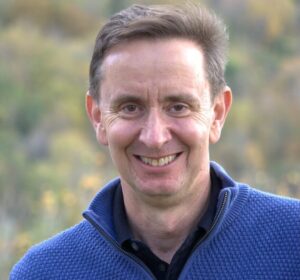
Peter Felten – Professor of History, Executive Director of the Center for Engaged Learning, and Assistant Provost for Teaching and Learning, Elon University

When gen AI can draft essays, solve equations, and tutor in any subject, why bother with courses, curricula, and college? Despite the AI hype, research demonstrates that human relationships are at the heart of higher education. Students need connections with trusted faculty who challenge and guide them, with peers who affirm and inspire them, and with staff who believe in their potential. Drawing on nearly 500 interviews, this interactive session explores how cultivating relationships in and out of the classroom can ensure that every student experiences welcome and care, develops disciplinary and vocational capacities, and engages with the questions that matter for their lives and our shared future.


Back to Top

Monday, 10:45 a.m. - Noon | Concurrent Sessions

Faith in Action: Service Learning as Christian Mission

Hunter Welcome Center, Zone A

Nursing Students as Advocates: Addressing Social Determinants of Health Through Service Learning
Rebekah Mullins – Instructor & Department Chair, School of Nursing; Abilene Christian University

This qualitative, interpretive, descriptive study explored how service-learning influences nursesí ability to advocate for social determinants of health (SDOH) in vulnerable populations. Advocacy is central to nursing practice, yet students often struggle to develop related skills and understanding. Nurses who participated in service-learning as students at Abilene Christian University were compared with those who did not. Certain findings were consistent with published literature, while other findings provided new insights.

Teaching Behind the Walls: A Qualitative Descriptive Study of Faculty Experiences in Prison Education Programs
Shannon Leinen – Provost & Chief Academic Officer; York University
Leanna Hawley – Director, Academic Resource Center; York University
Erin DeHart – Chair, Education Department; York University
Clark Roush – Chair, Music Department; York University
Darrel Sears – Professor, Bible and Ministry & PEP Program Director; York University

This qualitative descriptive study explored the lived experiences of faculty members who taught in a Prison Education Program (PEP) offered by a small, private Christian university in the Midwest. The program, which partners with an all-women’s correctional facility, has completed two three-year cohorts and continues to serve incarcerated students. While prison education research often emphasizes student outcomes, little is known about the educators who facilitate learning in these unique environments. Findings revealed a range of emotional, pedagogical, and institutional challenges as well as deeply rewarding moments of connection and transformation. The structure and research questions of this study are intentionally designed to be transferable and repeatable, allowing for future application across different institutional, geographic, and correctional contexts.

Teaching with Purpose: World Record Service Projects
Coleman Patterson – Associate Dean, College of Professional and Continuing Studies; University of Oklahoma

This presentation shows how Guinness World Record projects can transform business and leadership courses into mission-driven, experiential learning opportunities. Grounded in Jesus’ teaching to love your neighbor as yourself, these projects invite students to design record-setting events that meet real community needs. Participants will explore examples, learn practical strategies, and discover how this approach strengthens leadership development, service learning, and Christian mission in the classroom. 

Data, AI, and Discernment: Leveraging Technology for Student Success and Faculty Engagement

Hunter Welcome Center, Zone B

From Attendance to Engagement: Leveraging Analytics for Student Success
Rich Simpson – University Registrar; California Baptist University
Grace Brown – Associate Provost for Academic Services; California Baptist University

Discover how our institution transitioned from tracking attendance to measuring engagement using SIS data, LMS data, and retention alerts. Learn how this shift supports identifying at-risk students and enables timely interventions through integrated systems and analytics.

Exploring College Students’ Experience with Generative AI in Academic Learning
Hollie Reese – Instructor & Program Director, Communication Sciences and Disorders; Abilene Christian University

This presentation shares findings from a qualitative study exploring how college students describe their use of generative AI in academic coursework. Guided by the UTAUT2 framework, the study examines perceived benefits, challenges, and concerns. Results provide insight into student adoption of AI and offer practical implications for supporting AI literacy, informing instructional practices, and developing clear guidelines for the ethical and effective use of generative AI in higher education.

Love Thy Neighbor, Question the Bot: The Influence of Horizontal Faith on Faculty Attitudes Toward AI Chatbots
Amos Gutierrez – Director of Instructional Design; Abilene Christian University

Acceptance of AI chatbots is influenced by many factors, including not only demonstrable performance metrics and the perceived effort required for interaction, but also deeper cognitive attitudes toward the technology. This research asks a crucial question: how do core tenets of Christian faith, like loving one’s neighbor and the Imago Dei, complicate an individual’s acceptance of generative AI? This presentation will address factors of AI acceptance and highlight strategies for cultivating AI literacy that honor theological values and promote faithful stewardship of new technology.

Making Spiritual Relationships Visible: A 3D Framework for Spiritual Formation

Hunter Welcome Center, LYNAY Classroom

Stephanie Sorensen – Assistant Teaching Professor, Church History and Doctrine; Brigham Young University
Charles Graham – Associate Dean, McKay School of Education; Brigham Young University
Olivia Osguthorpe – Master’s Student, Instructional Psychology & Technology; Brigham Young University

This session introduces a 3D Relational Framework for spiritual formation that highlights the role of visible relationships in Christian higher education. Drawing on research from online learning contexts, the framework demonstrates how spiritual formation is strengthened when academic relationships are intentionally connected to relationships with God. Participants will explore practical implications for designing and facilitating learning environments where faith is seen, shared, and lived within educational communities. 


Back to Top

Monday, 1:15-2:30 p.m. | Concurrent Sessions

Transforming Teaching Cultures: Fostering Belonging and Excellence in Higher Education

Hunter Welcome Center, zone A

Faith Integration in Online Graduate Programs
Christie Bledsoe – Lecturer; Baylor University
Corina Kaul – Senior Lecturer; Baylor University

Grounded in the mission of Baylor University to educate men and women for worldwide leadership and service by integrating academic excellence and Christian commitment, this session highlights how we intentionally integrate faith into our online EdD program. We will share practical approaches to incorporating prayer and cultivating a caring, Christ-centered learning community in a virtual environment.

Transforming the Dissertation Process through Academic and Psychosocial Development
Christie Bledsoe – Lecturer; Baylor University
Melanie Meyer – Lecturer; Baylor University

Doctoral dissertation work requires students to have more than methodological competence; it demands resilience, motivation, and strong academic self-beliefs. Drawing on motivation theory, research on self-efficacy, and talent development scholarship, we examine how internal narratives are related to doctoral student persistence, productivity, and scholarly identity. In this session, we present concrete, research-informed strategies to support psychosocial skill development (i.e., motivation, self-beliefs) among graduate students engaged in scholarly writing and empirical research.

Designing Cultures for Teaching Excellence: Leadership Practices That Foster Educator Growth
Tana Palafox – Educator; Abilene Independent School District

This session shares discoveries from a qualitative study examining how organizational leadership practices shape educator growth, instructional effectiveness, and professional satisfaction. Those attending will study how leaders can grow cultures of trust, collaboration, and thoughtful or reflective practice, and will leave with valuable strategies for creating institutional conditions that support teaching excellence and student success.

Cultivating Support and Mentorship for Students with a Foster Care History

Hunter Welcome Center, Zone B

Navigating Faith and Foster Care: Christian Higher Education Support for Students with Foster Care History
Pansy Cornett – Doctoral Student; University of Mary Hardin-Baylor
Brenda Morton – Director, Doctor of Education Program & Professor, College of Education; University of Mary Hardin-Baylor

Students with experience in foster care (SEFC) face unique barriers to postsecondary success. While Christian universities emphasize compassion and biblical mandates, empirical evidence regarding their support for SEFC remains limited. This qualitative study explores how faith-based missions and values shape the lived experiences of SEFC. Findings offer practical, trauma-informed strategies and policy recommendations to align institutional missions with the needs of vulnerable students, ultimately fostering retention, belonging, and spiritual growth within higher education.

College Students with a History of Foster Care: Trends, Challenges, and Mentorship
Shannon Kaczmarek – Dean of Community Living and Wellness; Abilene Christian University

College students with a history of foster care represent a distinct population that encounters significant barriers to achieving academic and career success. Educational disparities experienced prior to college often persist into postsecondary education and beyond. This session will examine national data trends related to this population and highlight research exploring the relationship between foster care backgrounds and the impact of mentorship on college student outcomes.

Teaching the Teacher: The Developmental Power of Pedagogical Partnerships

Hunter Welcome Center, LYNAY

Brittany Deeg – Executive Director, Experiential Learning; Abilene Christian University
Payton Herring – Student Experience Specialist, Abilene Christian University

College pedagogy is challenging at best, relying largely on student evaluations and anecdotal departmental feedback. ACU’s Experiential Learning team sought to discover the ways environmental crafting through pedagogical partnerships impacted faculty and student partner development along five key dimensions, sourced from the AAC&U VALUE rubrics. These tie to outcomes associated with liberal education, and connect with theological perspectives of community, hospitality, calling, and wisdom.


Back to Top

Monday 3:00-4:15 PM | Concurrent Sessions

The Engaged Soul: Arts, Prayer, and Creation Care in Experiential Education

Hunter Welcome Center, Zone A 

Getting Creative with Creation Care, Indoors and Out
Kendra Jernigan – Associate Professor, Environmental Science; Abilene Christian University
Ian Shelburne – Adjunct Faculty, Abilene Christian University

How do you keep students attentive through the endless hours of a five-day course on Creation Care? Dr. Jernigan and Dr. Shelburne, veterans now of three shared attempts, offer selected teaching practices from these field trials that correlate with higher positive impacts on student learning than others (not to be mentioned). Join this session to discuss suggested practices in the categories of learning communities, experiential learning, and community-based/service learning.

The Impact of Centering Prayer in Classroom Settings on Emotional Well-Being and Spiritual Development
Antonio Méjico – Associate Dean, Division of Social Work; California Baptist University

Centering Prayer is a form of contemplative practice, attributed to Brother Lawrence in the 17th century. When integrated into the classroom environment, students have the opportunity to personally encounter God and experience academic and emotional benefits from dedicated time engaged in Centering Prayer. This workshop will provide insight into the use of Centering Prayer during class and the reported benefits as experienced by students.

Fostering Spiritual Wellbeing Through the Arts: A Collaborative Partnership
Emma Cartisano – Senior Coordinator for Chapel; Baylor University
Elisa Crowder – Education Coordinator, Martin Museum of Art; Baylor University

This presentation will explore a partnership between Baylor University’s Spiritual Life department and the Martin Museum of Art that integrates cognitive learning with embodied, emotional engagement. Through a chapel class held in the museum, students cultivate observation, reflection, relational connection, and spiritual practice within a sacred learning space. We demonstrate how museums can serve as powerful sites of holistic formation, inviting students to integrate intellect, imagination, and embodied experience in ways that enhance creativity, connection, and wonder.

From Major to Meaning: Transforming Introductory Courses Through Vocation

Hunter Welcome Center, Zone B

Chris Riley – Associate Professor, Government & Criminal Justice; Abilene Christian University
Jody Jones – Associate Professor, Finance; Abilene Christian University
John Ehrke – Associate Professor & Chair, Mathematics; Abilene Christian University
Greg Straughn – Professor, Music; Abilene Christian University
Dawn Swearingen-Meeks – Professor & Chair, Theater; Abilene Christian University
Caleta Willis – Assistant Professor, Agriculture and Environmental Science; Abilene Christian University

This interdisciplinary panel explores the intersection of vocation and academics in introductory, major-specific courses, shifting the focus from what students do after college to their purpose during it. By framing the introduction to the major as a foundation of identity formation, students can articulate not just what they study, but why it matters to their evolving sense of self and the world. Outcomes include increased engagement and retention, improved intradepartmental communication, and clearer assessment, transforming the intro course into a meaningful exploration of purpose.

Teaching Spirituality: Faith, Justice, and Doctoral Pedagogy

Hunter Welcome Center, LYNAY Classroom

Jennifer Costello – Director, Social Work; University of Mary Hardin-Baylor
Brenda Morton – Director, Doctor in Education Program; University of Mary Hardin-Baylor
Blayne Alaniz – Director, Student Disability and Testing Services & EdD Student; University of Mary Hardin-Baylor
Miriam Osterlund – Associate Director, Campus Activities & EdD Student; University of Mary Hardin-Baylor

This presentation examines the integration of Just Spirituality by Cannon into two doctoral-level courses at a Christian university using structured discussion-based pedagogy. Presenters will share how guided reflection, justice-centered theology, and collaborative dialogue fostered deep engagement with faith, leadership, and social responsibility. Attendees will gain practical strategies for implementing justice-oriented, faith-integrated texts using high-impact practices across disciplines.


Back to Top

Monday, 4:30 - 5:30 p.m. | Student Panel

Laura Carroll portrait.

Student Panel

Hunter Welcome Center, Zone C

High Impact, Deep Formation: Listening to Student Experience
Laura Carroll – Assistant Provost for Teaching, Learning, and Vocational Formation & Director of the Adams Center for Teaching and Learning, Abilene Christian University

For years, research has demonstrated that high-impact practices benefit our students in remarkably positive ways, including college completion, deep learning, and engagement. These experiences create meaningful opportunities for students to connect theory with practice and can uniquely support vocational formation. In this session, we’ll hear directly from students engaged in high-impact practices and consider how these experiences shape both their academic journeys and their spiritual formation.


Back to Top

Tuesday, 9:00-10:15 a.m. | Concurrent Sessions

Courageous Classrooms: Engaging the Complexities of a Diverse World

Hunter Welcome Center, Zone A

Centering Student Questions
John Hawthorne – Author & Former Educator/Christian Higher Education Administrator

In too many cases, Christian Universities have attempted to avoid difficult topics in pursuit of a safe environment. However, the changing nature of today’s students, informed by a lifetime of social media, means that these topics are precisely those most important to students’ growth and development. Drawing upon my 2025 book, The Fearless Christian University, as well as my four decades of teaching sociology and/or serving as administrator in five CCCU institutions, I provide methods of engaging students in ways that can serve them not just for their college years but for decades to come.  

Teaching Abrahamic Religions After October 7
Sherie Gayle – Doctoral Student, Theological & Religious Studies; Georgetown University

High-Impact pedagogical practices can support faithful interreligious teaching within Christian higher education. Drawing on classroom experience at Georgetown University in Qatar, a Catholic institution in a Muslim-majority context, the presentation explores comparative theology, game-based learning, and structured religious deidentification as strategies to foster deep engagement without requiring students to abandon commitments to their home faith traditions. The session offers practical tools for navigating politically sensitive classrooms with rigor, care, and Christian integrity.

Transforming First-Year Required Courses in Christianity

Hunter Welcome Center, Zone B

John Boyles – Professor of Bible, Missions, and Ministry; Abilene Christian University
Amanda J. Pittman – Associate Professor of Bible, Missions, and Ministry; Abilene Christian University
Heather M. Gorman – Associate College Professor of Bible, Missions, and Ministry; Abilene Christian University
Omar Palafox – Assistant Professor of Bible, Missions, and Ministry; Abilene Christian University
Amy McLaughlin-Sheasby – Assistant Professor of Bible, Missions, and Ministry; Abilene Christian University
Cliff Barbarick – Associate Professor & Chair of Bible, Missions, and Ministry; Abilene Christian University
Carson Reed – Dean, College of Biblical Studies; Abilene Christian University

This panel offers perspectives from the faculty committee responsible for a recent overhaul of a required first-year course sequence designed to ground students in the Christian tradition. Department and college leadership will also offer their perspectives on the redesign process. Panelists will discuss the goals, process, and outcomes of this curricular transformation, which was informed by years of research and sustained collegial conversation.

Preserving Student Agency with AI: Good Notebook LM as Pedagogical Tool

Hunter Welcome Center, LYNAY Classroom

Vic McCracken – Professor of Bible, Missions, and Ministry; Abilene Christian University
Jon Camp – Associate Professor, Communication and Sociology; Abilene Christian University

As AI tools become more prevalent in education, it is incumbent upon educators to identify pedagogies that maximize the agency of our students. In this session, Dr. Jon Camp and Dr. Vic McCracken will explore the potential benefits of Google Notebook LM, an AI-focused system that can be employed to optimize student engagement in the learning process, discuss observations gleaned from this pedagogical experiment, and suggest future directions for adopting AI tools such as Notebook LM to enhance student learning.


Back to Top

Tuesday, 10:30-11:45 a.m. | Concurrent Sessions

The Character of Education: Virtue, Values, and Vocation in the Christian Academy

Hunter Welcome Center, Zone A

Forming Vocation and Ethical Leadership Through Integrated PCUSA Education
Dongwoo LeeUniversity Minister & Faculty; Schreiner University

This presentation introduces an innovative PCUSA model linking Presbyterian Pan American School, Schreiner University, and Austin Presbyterian Theological Seminary. The integrated pathway nurtures students from faith discovery to ministerial leadership through academic study, spiritual formation, and vocational discernment. It includes dual credit courses, a Pre-Seminary Leadership Program, a six-year accelerated track, and an M.Div and MBA dual degree program, forming ethical, faithful, and transformative leaders for church and society.

Virtue Development & Vocation Building: How We Transformed Teaching/Learning Experiences
Meg ReisterProfessor, Special Education and Early Childhood; Franciscan University of Steubenville
Becca RookChair, Education Department; Franciscan University of Steubenville

Two professors engaged in transformative practices of teaching and learning, enabling college students to take part in three high-impact practices. The presenters will share how elements of faith and the university’s mission are integrated into coursework, how students grow in virtue through collaborative assignments and project completion, and how teaching through ministry has provided opportunities for college students to implement what they have learned in their coursework and to be educator witnesses outside the classroom.

Values-Based Education and Mission-Aligned Learning in Christian Higher Education
Hilary NwainyaAssociate Dean & Assistant Professor; St. Thomas University

This presentation explores how Christian institutions can align teaching with mission through values-based education that advances holistic student development and ethical formation. Drawing on St. Thomas University’s mission to form ethical leaders for a diverse global community, it demonstrates practical integration of High-Impact Practices supported by policies such as STU’s 7 Ethical Standards for the Use of AI and its modesty-centered dress code. Participants will engage replicable strategies for academic excellence, spiritual formation, and mission-anchored student success.

Real-World Readiness: Experiential Learning for Professional Studies

Hunter Welcome Center, Zone B

How Participation in Awards Competitions Impacts Undergraduate Students
Kenneth NehrbassDirector of Assessment for Educational Effectiveness; California Baptist University

Are Student Awards Competitions a High Impact Practice? The purpose of this grounded theory study is to understand factors that contribute to the impact of award competitions on undergraduate students.

Seek First to Understand
Kevin Phillipson – Associate Professor of Entrepreneurship; McMurry University

Entrepreneurial mindedness is for everyone, not just those seeking to start a business. Fundamental to entrepreneurial thinking is understanding what you have to work with, your tools. This presentation will conduct a deep dive into a personal SWOT analysis. To perform an objective analysis, we utilize a Genetic Dominance Profile (GDP). Your GDP is established eight days after conception, innately programming how you think, perceive, and react to people and specific situations.

Experiential Learning in Business Communication: Hands-On Digital Skill Development
Rich Simpson – University Registrar; California Baptist University
Robert Shields – Interim Dean, Dr. Robert K. Jabs School of Business & Associate Professor; California Baptist University

This session highlights how a Business Communication course leverages hands-on activities, GMetrix training, and real-world tools to teach professional communication strategies. Learn how experiential learning fosters engagement, builds technical proficiency, and prepares students for workplace success. Attendees will gain practical insights into designing courses that integrate authentic tasks and technology-driven learning experiences aligned with Christian higher education values.

Who We Honor Shapes How We Teach

Hunter Welcome Center, LYNAY Classroom

Amy BooneTeaching and Learning Specialist; Abilene Christian University

Universities often acknowledge commemorative months and holidays, yet faculty may struggle to see their relevance beyond awareness or celebration. This session highlights a Center for Teaching and Learning’s approach to faculty programming around these heritage and diversity months as intentional faculty formation. Grounded in Christian theology, these practices invite faculty to love their neighbors, teach more faithfully, and cultivate hospitable classrooms.


Back to Top

Closing Keynote

Closing Keynote

Hunter Welcome Center, Zone C

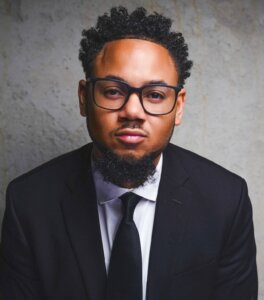
Chris Cobbler – Vice President of Vocational Formation and Flourishing & Executive Director of the Center for Vocational Formation; Abilene Christian University, Dallas Campus

Dr. Christopher Wilberforce Cobbler Sr. was born in Windsor, Ontario, Canada and currently lives in the Metro Detroit area with his wife Kahra-lyn and their three children Hannah, Christopher Jr., and Elijah. He has a wide variety of academic and congregational experience in the field of spiritual and vocational formation. His journey of faith was deeply shaped by the vivid Spirit-driven passion of his Pentecostal background and the high view of Scripture he shares with the Church of Christ heritage. He has served as a minister in Churches of Christ, Christian Churches, and non-denominational churches in Canada and the United States. Dr. Cobbler has graduated from Alberta Bible College, Rochester University and Lipscomb University and has over fifteen years of pastoral experience. His greatest passion is to see Christian communities become a sign, instrument, and foretaste of the kingdom of God.


Back to Top